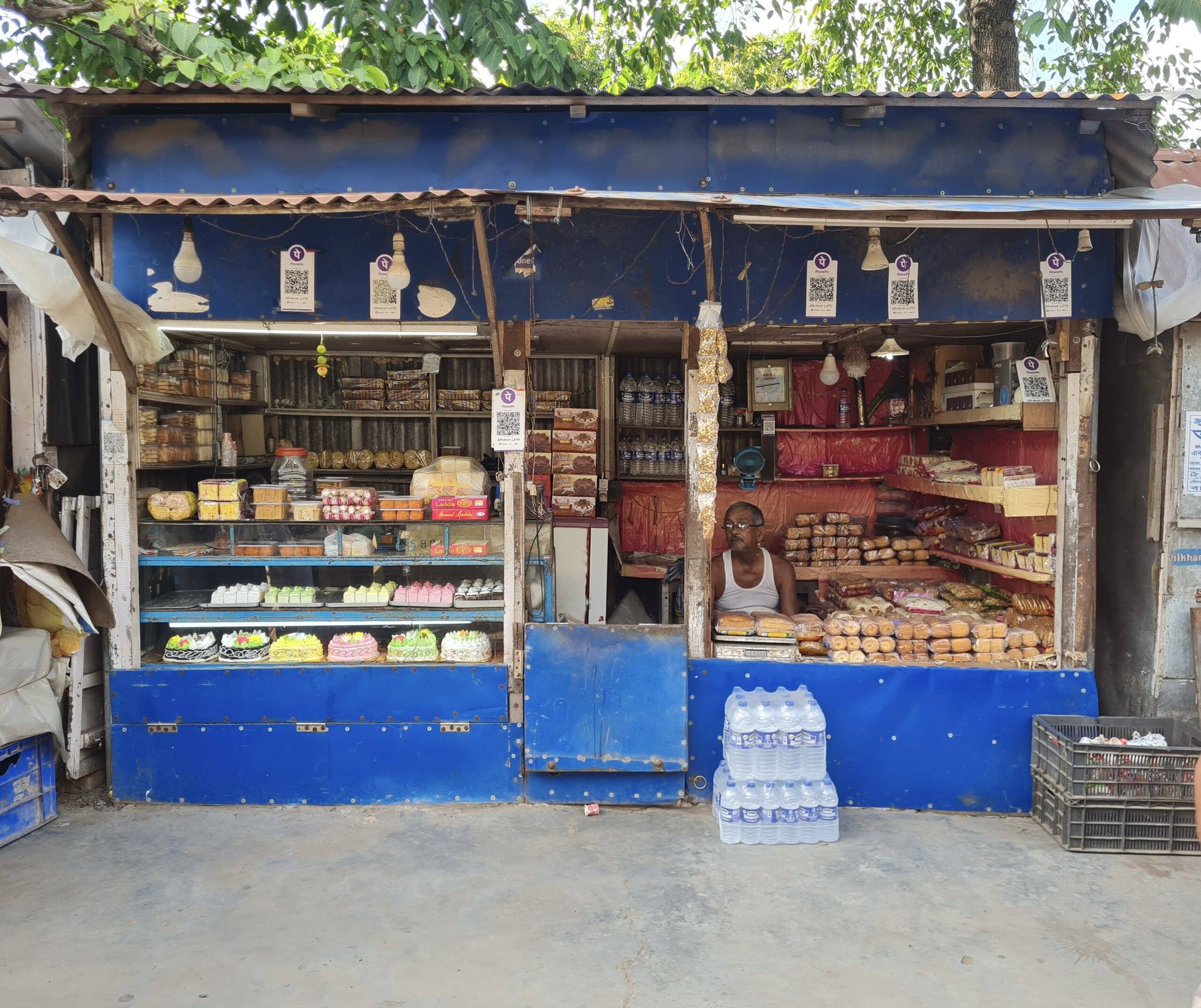





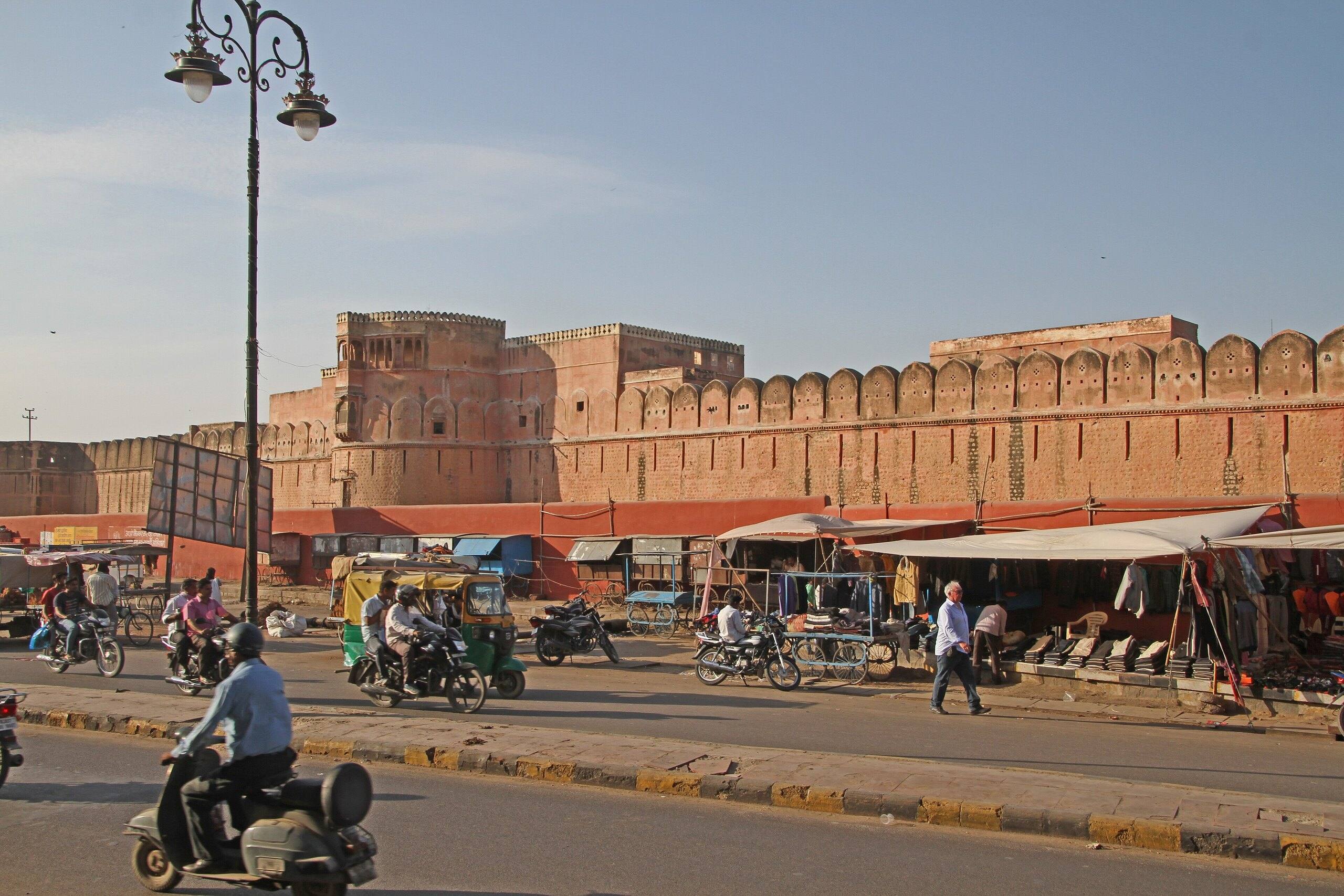
Two buyers, two different jobs
Picture a caterer in Bikaner who posts a Navratri thali on Instagram. A viewer sends a message: “Rate?” The caterer pastes a long reply with the menu, the minimum order, the areas covered and a phone number. The viewer asks for photos of an earlier event, then asks where the kitchen is. Eleven messages later the chat goes quiet. Nothing was wrong with the caterer. The same questions arrive in the same order every time, and every answer lives in one person’s thumbs.
Now picture someone in Jaipur typing “CA for GST notice reply” into Google. She knows no one in the trade. She opens four listings, skims each for a minute and shortlists two. What she reads decides who gets the call.
Both scenes are illustrations, not clients. They are here because these two buyers need different things from you. The first already knows your name and wants to confirm you are real. The second does not know you and is comparing. Most of the argument about whether a business needs a website is really a confusion between those two buyers.
Confirmation is cheap to serve. Discovery is not.
Confirmation traffic comes from a friend’s recommendation, an Instagram post, a WhatsApp forward, a visiting card or the QR code on your counter. That buyer wants five answers: who you are, where you are, what you do, roughly what it costs, and how to reach you right now. One page can hold all five. This is the job Dwize Go is built for: one public link that carries proof, contact paths, a service summary and the next action.
Discovery traffic comes from a search for a need. For a local business, Google leans on the Business Profile first. Google names three factors behind local results: relevance, distance and prominence. Prominence includes how many websites link to you and how many reviews you have. The same page says there is no way to pay for a better local ranking.
A website is not even a condition for appearing. Google’s profile guidelines ask for a phone number that connects to your location or a website that represents it. A clinic with a verified profile and a phone that rings can be found without a site. What a site adds is the next minute, the one in which the buyer compares you with the other two shortlisted names.
Six questions, in this order
Run these on paper. Stop at the first one that settles it.
- Do customers pay you online, through a cart or a payment page? If yes, neither a link nor a brochure site is the product you need. You need an online store, which is a different product at a different price. Stop here.
- Can a customer visit you, or do you travel to them? Google’s guidelines say you can create a Business Profile if your business has a location customers can visit or travels to customers. A remote consultant or an online course seller fits neither description, so Maps will not carry you and the website is your whole public surface. Lean to a full site.
- How many separate things would someone search for by name? One or two, and a link can carry them. Three is the grey zone, so let question 4 decide. Four or more (GST filing, audit, company registration, trademark) and each deserves a page of its own.
- How much must a buyer read before trusting you? A haircut needs a photo and a map pin. An order of packaging machinery needs specifications, certificates and a catalogue. The bigger and slower the purchase, the more reading you owe the buyer, and reading means pages.
- Does anyone need to find you who has never heard your name? Look at your last ten enquiries. If nine already knew who you were, you are in confirmation mode. If you want to be found for “tent house near Gajner Road”, a profile and pages have to work together.
- Will the content change every week, such as a daily menu or stock-driven prices? Neither a link nor a site is the right container for fast change. Keep the moving part in WhatsApp and let the page hold what stays still.
If question 1 is yes, you want a store. If question 2 rules out Maps, or questions 3, 4 or 5 point to more pages, you want a full site. Anything else, start with the link.
How this plays out by business type
The table is our judgement from how these buyers tend to arrive. It is not survey data, and your own enquiries beat it.
| Business | How buyers usually arrive | Start with | Move up when |
|---|---|---|---|
| Caterer, tent house, decorator in a town | Referral, Instagram, WhatsApp forward | Go | You want to rank for “[service] in [town]” or run eight or more packages that need explaining |
| Plumber, AC repair, electrician | A neighbour’s recommendation, or a Maps search | Verified Business Profile plus Go | You add a second team and want to advertise by area |
| Salon or tailor | Instagram, walk-in | Go | A second branch, or a price list too long for one page |
| Single-doctor clinic | Referral, then Maps | Business Profile plus Go | A second doctor, or conditions patients search for by name |
| CA, CS or law practice | A search for a named need, then referral | Site | Online payments or client portals enter the picture |
| Coaching centre | Parents comparing batches, fees and results | Site | A second city, or enrolment and payment online |
| B2B manufacturer or trader | Distributors and procurement desks, trade referral | Site | You start taking online orders |
| Online-only D2C label | Instagram, ads, marketplaces | A store, not these two | Not applicable |
What a single page cannot do
A single page has one title and one subject, so it cannot give each service its own page. Three services on it means three searches competing for one URL. Google’s SEO starter guide tells owners to think about the words a person might search for to find a piece of content, and a single page cannot match several sets of words at once.
Depth is out of reach as well. Case studies, price explainers and answers to the twelve questions every buyer asks need room.
Two languages do not fit either. Google wants each language version at its own URL, with every version pointing to the others. A Hindi version is therefore at least a second page.
The search plumbing is thin. Go includes a basic title and description. Search Console, analytics and the Business Profile foundation belong to Site. So do ongoing page updates and the full Care Year; Go has one pre-publish revision window before launch.
And it cannot sell: no cart, no booking engine, no app flow.
What it does well is the confirmation job. A WhatsApp click-to-chat link in the form wa.me/91XXXXXXXXXX?text=… opens a chat with your number and a message already typed, so the buyer starts with context instead of “rate?”. Add call, map and social links, and one address can sit in your Instagram bio, WhatsApp profile, Google listing, visiting card and counter QR.
The address you do not own
The base Go path lives on a Dwize-managed address, yourname.dwize.in. That is a deliberate choice, because the first problem for a micro-business is usually a missing credible link, not domain ownership. It also means the address is not yours.
There is a precedent worth knowing. Google told owners in February 2024 that the websites built inside Business Profiles would be switched off, with a redirect to the profile that would work only until 10 June 2024. Any bio link, card or printed QR code that pointed at one of those sites needed replacing. That was a bundled tool from a platform, and Go is a paid, managed link from a named company, so the cases differ. The lesson still transfers: before you print an address, ask whose name sits on it and what happens if the arrangement ends.
If the address should outlive any vendor, take the custom-domain add-on. Dwize registers that domain in your business’s own name, so the registrant field carries your name and the address travels with you if you ever leave. Final domain terms are confirmed during onboarding.
What the gap costs and buys
Published prices at the time of writing, October 2026, all GST inclusive:
- Dwize Go on a Dwize-managed address: ₹2,499 a year, live within 7 business days after your details and proof are locked.
- Go with your own domain and cloud hosting: ₹2,499 plus ₹2,499, which is ₹4,998 a year.
- Dwize Site: ₹49,900 a year, or ₹14,900 a quarter, delivered in 15 business days from content lock. Domain registration is a pass-through at cost, about ₹2,100 a year. Four quarterly payments come to ₹59,600, so the quarterly rhythm costs ₹9,700 more across the year than paying annually.
The gap between ₹4,998 and ₹49,900 is almost exactly tenfold. The Site price buys up to nine pages, English plus one Indian language, the search foundation, and the Care Year: 12 content updates, each live within 2 business days, plus a monthly check-in and written renewal terms. The full grid is on the pricing page.
Do not buy the gap until a signal below is true. Before you pay anyone for either, check that two things exist that need no vendor at all: a verified Google Business Profile and a filled-in WhatsApp Business profile. A page that sits on top of an empty profile is decoration.
Five signals that it is time for a site
- You paste the same long explanation into WhatsApp three or four times a week. That text is a page waiting to be written.
- People ask for a service you offer that your link never mentions. You have crossed the line drawn in question 3.
- You want to run a paid campaign. An advertisement should land on a page that matches what it promised, and a general link wastes the click.
- Customers ask for a second language.
- Most enquiries now come from strangers who had never heard your name. Ask every new enquirer how they found you for a month and count. Once a site exists, Search Console, a free Google service, shows which queries bring people in. Expect a lag: the starter guide says some changes show within hours and others take several months.
The upgrade path
Treat it as a ladder with a rung below the first paid step.
- Verified Business Profile and WhatsApp Business profile, filled in properly.
- Go, when you need one credible link for everything you share. The proof and service summary you assemble for it are the raw material a site would need later, so the effort is not wasted.
- Site, when one of the five signals fires.
- Store, App or Brand, when customers must order, book or return inside your own surface. A 25% loyalty credit applies toward those if you upgrade from Site within the first Care Year.
When neither is the answer
Skip both if you sell online with a cart, if your content changes daily, or if you need custom software behind the page. Those are different products with different prices, and forcing them into a link or a brochure site fails in ways that are expensive to undo.
Write your answers to the six questions on paper, add your business name, and send them to us. If the honest answer is a verified Business Profile and a better Instagram bio, we will say so.
Questions this answers
Quick answers
Can I run a business on a link-in-bio page alone?
Yes, if your customers arrive through people and platforms that already know you, such as referrals, Instagram, WhatsApp and a shop counter. It stops working when strangers need to find you by searching for a service, or when you sell more than a couple of distinct things that each need explaining.
Do I need a website to appear on Google Maps?
No. Google's guidelines ask for a phone number that connects to your location or a website that represents it, not both. You do need a location customers can visit or a business that travels to customers, so a purely online business has no Maps listing to rely on.
Is Dwize Go on a dwize.in address a problem for credibility?
It is a trade-off. The base Go path lives on yourname.dwize.in, which keeps the first decision light but means the address is not your own. If the address should outlast any vendor relationship, take the custom-domain add-on. Dwize registers that domain in your business's own name, so the address stays yours.
When should I move from Go to a full Dwize Site?
Move when you are pasting the same long explanation into WhatsApp several times a week, when customers ask for services your link does not list, when you want to run paid campaigns, when you need a second language, or when strangers rather than referrals bring most of your enquiries.
- #business-page
- #website-scope
- #dwize-go
- #decision-guide
- #msme