





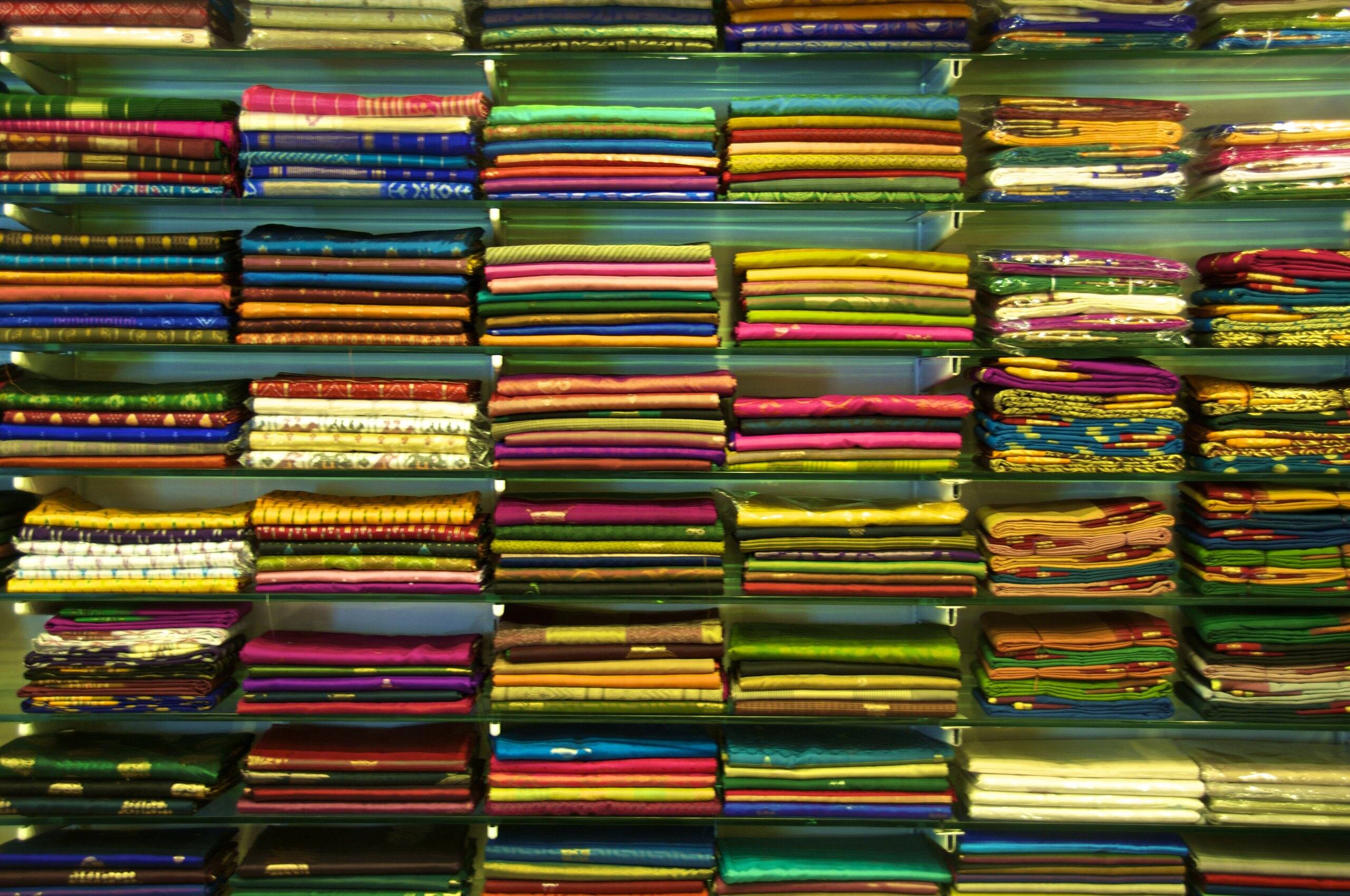
Bought with the eyes, returned for the size
Consider a Kota Doria seller whose Instagram following has outgrown WhatsApp. Orders come in as screenshots, customers ask the same three questions (the exact colour, the length, whether it is pure), and one in ten parcels comes back. Moving to an online store will not fix that by itself. What fixes it is a product page that answers those questions before the order.
The seller is an illustration, not a client. The problem is common to textiles. A saree that looked red on the phone and arrives maroon is a return, however fine the weave. Every section below is about showing the product truthfully, charging the right tax, and proving the claims you make.
What each product page must show
The details buyers check
- Colour, honestly photographed: daylight photographs, a close-up of the weave or print, and the drape on a person or form. Say if colour varies by dye lot.
- Length and width: saree length, blouse piece included or not, fabric width; for garments, the measurements behind each size.
- Fibre and construction: cotton, silk, silk-cotton, viscose; handloom, powerloom or mill; zari type.
- Care: washing and storage instructions.
- Variants: each colour and size as its own selectable option with its own stock, so a buyer never orders a variant you do not have.
What the law requires on the page
For garments and hosiery sold loose, a 2022 Legal Metrology amendment, in force from 1 January 2023, requires the name and address of the maker, marketer or brand owner, consumer-care contact, the size in letters (S to XXXL) plus measurements in centimetres, and the MRP inclusive of all taxes, and requires these details on the e-commerce website when the garment is sold online. Packaged goods carry the full set of declarations: maker or packer, country of origin, generic name, net quantity, month and year of manufacture, MRP and consumer care. Fabric sold by length shows a unit sale price per metre where the MRP is not already per metre.
Sizes: there is now an Indian survey
Most Indian sellers borrow foreign size charts. INDIAsize, the NIFT-led survey for the Ministry of Textiles, 3D-scanned 26,324 people and published 14 body size charts for men and 13 for women; the full charts have been available online since 2 January 2026. A national size-label standard, the “IN Tag”, is still being developed, so nothing is mandatory yet. Using measured Indian charts and printing the centimetres behind each letter size is the cheapest way to cut size returns.
GST after September 2025
CBIC Notification 9/2025, in force from 22 September 2025, split textiles like this:
| Product | GST |
|---|---|
| Readymade garments and clothing accessories, up to ₹2,500 per piece | 5% |
| Garments, accessories and made-ups, above ₹2,500 per piece | 18% |
| Woven and knitted fabrics (silk, cotton, wool, man-made) | 5%, no price limit |
| Hand-made or hand-embroidered shawls | 5% |
Before September 2025 the dividing line was ₹1,000 per piece and the higher rate was 12%, so a ₹2,000 kurta came down from 12% to 5%, while a ₹3,000 one went up from 12% to 18%. The GST Council also cut man-made fibre from 18% to 5% and man-made yarn from 12% to 5%.
Two questions have no official clarification that we could find: whether a saree or dupatta is classed as fabric or apparel in your case, and whether the ₹2,500 test applies to the price after a discount. Both change the tax on a premium handloom piece. Settle them with your CA before you set prices, and keep the store’s tax settings per product, not per category.
Marks and names: show only what you hold
- India Handloom Brand certifies niche handloom products: 100% handloom, natural fibre, and stated quality and environmental standards. Cooperative societies, self-help groups, producer companies and weaver entrepreneurs can apply online; garment makers qualify only if they use IHB-branded fabric. Registration involves a site visit, a lab test and a committee, is valid for three years, and the registration number must be printed on every label.
- Handloom Mark, run by the Textiles Committee since 2006, assures buyers that a product is handwoven rather than powerloom or mill-made, and is still current alongside India Handloom Brand.
- Silk Mark labels go only on 100% pure silk and only from authorised users registered with the Silk Mark Organisation of India, a Central Silk Board initiative. The mark covers the silk, not the zari.
- GI names. Only registered authorised users have the exclusive right to use a registered GI, such as Kota Doria or Banaras Brocades and Sarees. A genuine producer can apply to the GI Registry to become one.
Handloom is also protected by law: the Handlooms (Reservation of Articles for Production) Act, 1985 reserves eleven textile articles for handloom production. “Handloom” on your store should mean handloom.
Returns, refunds and the rest of the store
A business selling its own stock on its own website is an inventory e-commerce entity under the Consumer Protection (E-Commerce) Rules, 2020. The rules do not set a return window in days; they require you to disclose your terms. The store must:
- show your legal name, address, customer care and a grievance officer, with complaints acknowledged within 48 hours and resolved within a month;
- state the return, refund, exchange, delivery and return-shipping terms clearly;
- show one total price with delivery charges and tax in the breakup;
- take back goods that are defective, not as described or delivered late;
- never use pre-ticked boxes, or charge cancellation fees you would not pay yourself;
- never post reviews posing as a customer.
From 1 January 2027, a 2026 amendment requires any announced price cut to show the “prior price”, the lowest price in the previous 30 days, so “Diwali sale: 40% off” will need its baseline on the page.
For payments, RBI’s September 2025 payment aggregator directions allow small merchants with turnover up to ₹40 lakh to be onboarded with simpler checks, which helps a weaver society open an online payment account in its own name.
Who you are selling beside
India’s fourth handloom census (2019-20) counted 35.22 lakh handloom weavers and allied workers, over 72% of them women. Textile exports, including handicrafts, were ₹3,16,334.9 crore in 2025-26. Government channels exist too: about 1.5 lakh weavers and handloom entities are on GeM. Your own store is the channel where the buyer sees your name, not a marketplace’s.
The checklist
| Where | What it must carry |
|---|---|
| Product page | Daylight photos and weave close-up, colour note, length and width or size with cm, fibre and construction, care, variants with stock, MRP inclusive of taxes |
| Garment details | Maker or brand owner name and address, consumer care, size in letters plus cm |
| Claims | IHB or Handloom Mark registration number, Silk Mark only on pure silk you are authorised for, GI name only if an authorised user |
| Site-wide | Legal name and address, grievance officer, return, refund, exchange and delivery terms |
| Checkout | Total price with breakup, GST per product at the right rate, no pre-ticked boxes |
What Dwize builds for a textile seller
Dwize Store is ₹2,99,000 a year, GST inclusive, ready in 25 business days from content lock: a catalogue with sizes, colours and variants, checkout and order flow, GST invoicing, UPI, cards, netbanking and cash on delivery through payment accounts in your own name, a WhatsApp catalogue for buyers who ask first, and an optional path to ONDC. The Care Year covers twelve content updates, such as a new collection or a revised return policy, each live within two business days.
For a label with repeat customers, Dwize Brand adds iOS and Android shopping apps on the same catalogue. The registrations, marks and tax classification are yours to hold; the store is built to show them correctly.
Rates and rules here are as of October 2026; GST rates can change at any GST Council meeting. See Dwize for textile and handloom businesses, or the district pages for Bhilwara and Kota.
Questions this answers
Quick answers
What GST applies to sarees, fabric and garments now?
Since 22 September 2025, readymade garments and clothing accessories up to ₹2,500 per piece are taxed at 5% and those above ₹2,500 at 18%; before that the line was ₹1,000 and the higher rate 12%. Woven and knitted fabrics stay at 5% with no price limit, and hand-made or hand-embroidered shawls are 5%. Whether a particular product is classed as fabric or apparel decides the rate, so confirm the classification of your sarees and dupattas with your CA.
Can I put 'handloom' or 'pure silk' on my store?
Describe your product truthfully, and show a certification mark only if you are registered for it. India Handloom Brand and Handloom Mark each have their own registration, and Silk Mark labels may be used only by its authorised users on 100% pure silk. A registered GI name, such as Kota Doria or Banaras Brocades and Sarees, may be used only by registered authorised users.
Do I have to accept returns on my own website?
The e-commerce rules do not fix a return window, but you must state your return, refund and exchange policy clearly, and you cannot refuse to take back goods that are defective, not as described or delivered late. A clear policy and accurate photographs do more to reduce returns than strict rules.
Is there an official Indian size chart I can use?
The INDIAsize survey, led by NIFT for the Ministry of Textiles, scanned 26,324 people and published 14 size charts for men and 13 for women; the full charts have been online since January 2026. A national size-label standard is still being developed, so there is no mandatory Indian size label yet. Legal Metrology rules do require sizes in letters plus centimetres.
- #textiles
- #handloom
- #gst
- #ecommerce
- #silk-mark
- #returns
- #msme